Framing & care guide
Oak vs black frames for wall art
Choose oak when you want a warmer, lower-contrast boundary and black when the composition benefits from a sharper graphic edge. PosterBloom offers both without a mat or mount.
PosterBloom guide · 7 min read · Updated Jul 14, 2026
The useful version
Choose the natural oak-effect finish when you want the frame to echo pale or warm room materials and keep contrast softer. Choose black when the artwork needs a firmer edge or the room already has dark anchors. Both PosterBloom finishes use the same solid satin-laminated wood construction; “oak-effect” describes the finish, not solid oak.
Start with the image edge, not the furniture catalog
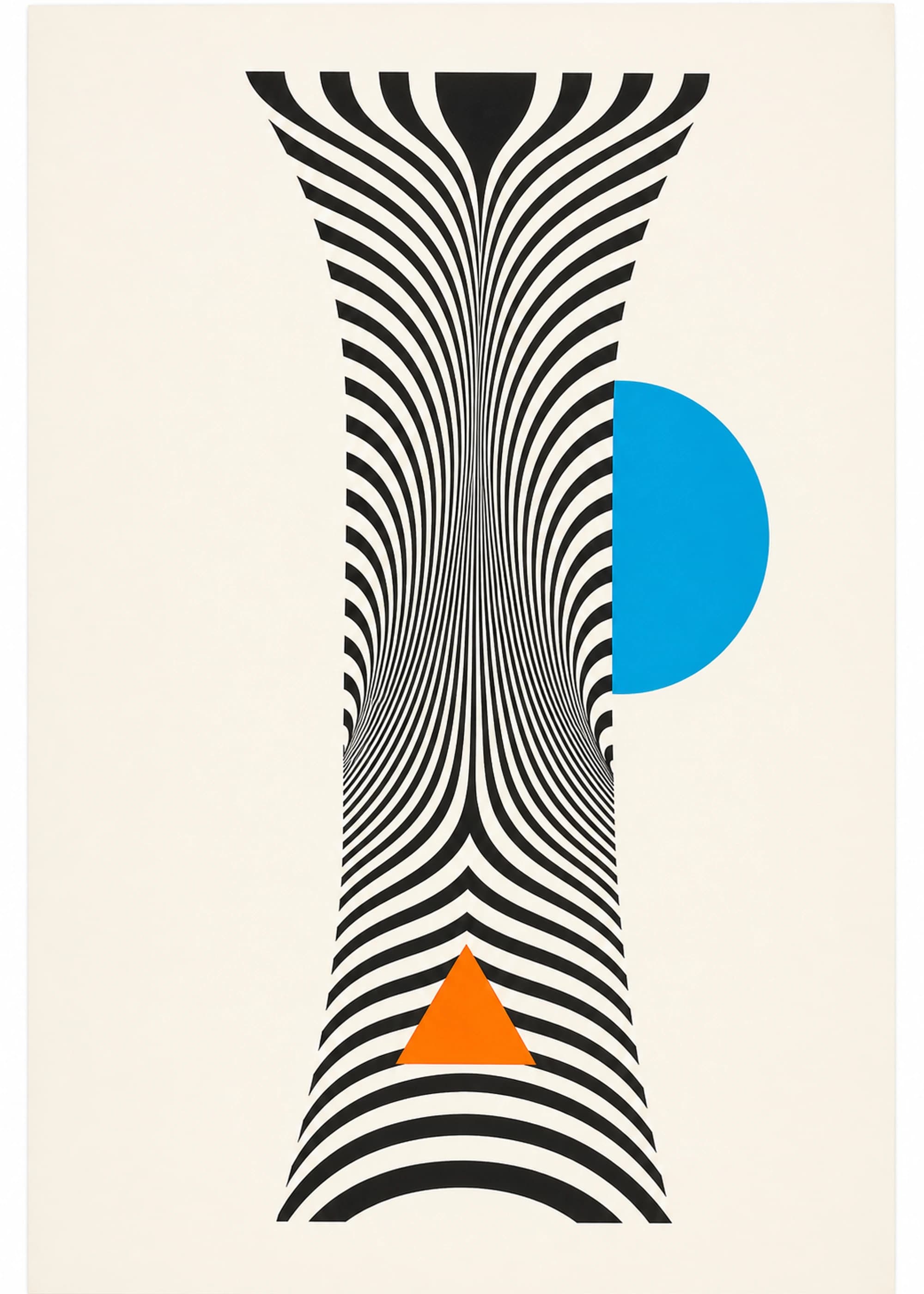
The frame sits directly beside the artwork, so first inspect the image's outer edge. Pale paper, quiet marks, or low contrast can feel more open beside a natural finish. A dark line, black field, or compressed composition can either connect cleanly to black or feel boxed in by it. The answer depends on the specific edge, not a rule that one frame belongs to one decorating style.
Then step back to the room. Repeat one existing material or contrast level rather than trying to match every finish. A frame can echo a table, window profile, lamp, or cabinet without being an exact color match.
Choose natural oak-effect for warmth and lower contrast
- The room already uses pale or warm wood. Repeating that material family can connect the print to the room without matching the furniture finish exactly.
- The artwork has paper-toned or earthy passages. A natural edge can continue those warmer notes and keep the transition to the wall gradual.
- The composition needs less visual weight at its perimeter. On a pale wall, the natural finish often reads with less contrast than black, leaving more attention on the image.
PosterBloom calls this finish natural oak-effect laminate. It is applied to solid satin-laminated wood; it is not a claim that the frame is made from solid oak.
Choose black for structure and a stronger boundary
- The artwork contains a decisive dark structure. Black can extend a grid, outline, or dark focal area and make the framed object read clearly from across the room.
- The room has existing black anchors. Window frames, lighting, shelving, or hardware can give the frame a relationship to the architecture without requiring black furniture everywhere.
- A set needs one repeated perimeter. Black frames can organize prints with different palettes. Check that the common edge supports rather than overwhelms the lightest work in the group.
PosterBloom's black option is a black satin laminate over the same solid satin-laminated wood construction as the natural option.
The finish does not change the stated glazing or create a conservation rating
Both active frame finishes use Perspex glazing. PosterBloom does not represent the natural finish as more breathable, the black finish as more protective, or the standard glazing as UV-filtering. Frame color is an aesthetic decision; light exposure, room conditions, handling, backing, mounting, and glazing specifications are separate care decisions.
If the wall receives strong direct sun or the work needs a specialist enclosure, discuss documented glazing and mounting options with a qualified framer rather than inferring performance from the finish name.
Test the choice against a real print and wall
Quiet, warm, or low-contrast work
Begin with natural oak-effect, then compare black. If natural makes the artwork disappear into the wall, the stronger black boundary may be the better decision.
Graphic, dark, or high-contrast work
Begin with black, then compare natural. If black makes the edge too heavy, the warmer finish can preserve the artwork's structure without doubling its darkest value.
Compare Optical Systems Column and Quiet Load Bearing as two different edge and contrast problems. Use each PDP's live variants rather than assuming every product has the same availability.
Include the outside frame in the room plan
A framed object is larger than its nominal paper size, and a commissioned mat increases the footprint again. Use the wall-art size calculator for the arrangement, then confirm the finished outside dimensions before drilling. For the separate border decision, see mat vs no mat. Current PosterBloom framed variants ship without a mat unless the selected variant explicitly says otherwise.
Keep exploring
Sources and further reading
Framing and care guidance in this guide is grounded in the manufacturer, museum, and conservation sources below. PosterBloom product details describe our current active catalog configuration.